Aegis
Runtime Security & Governance for Autonomous AI Agents
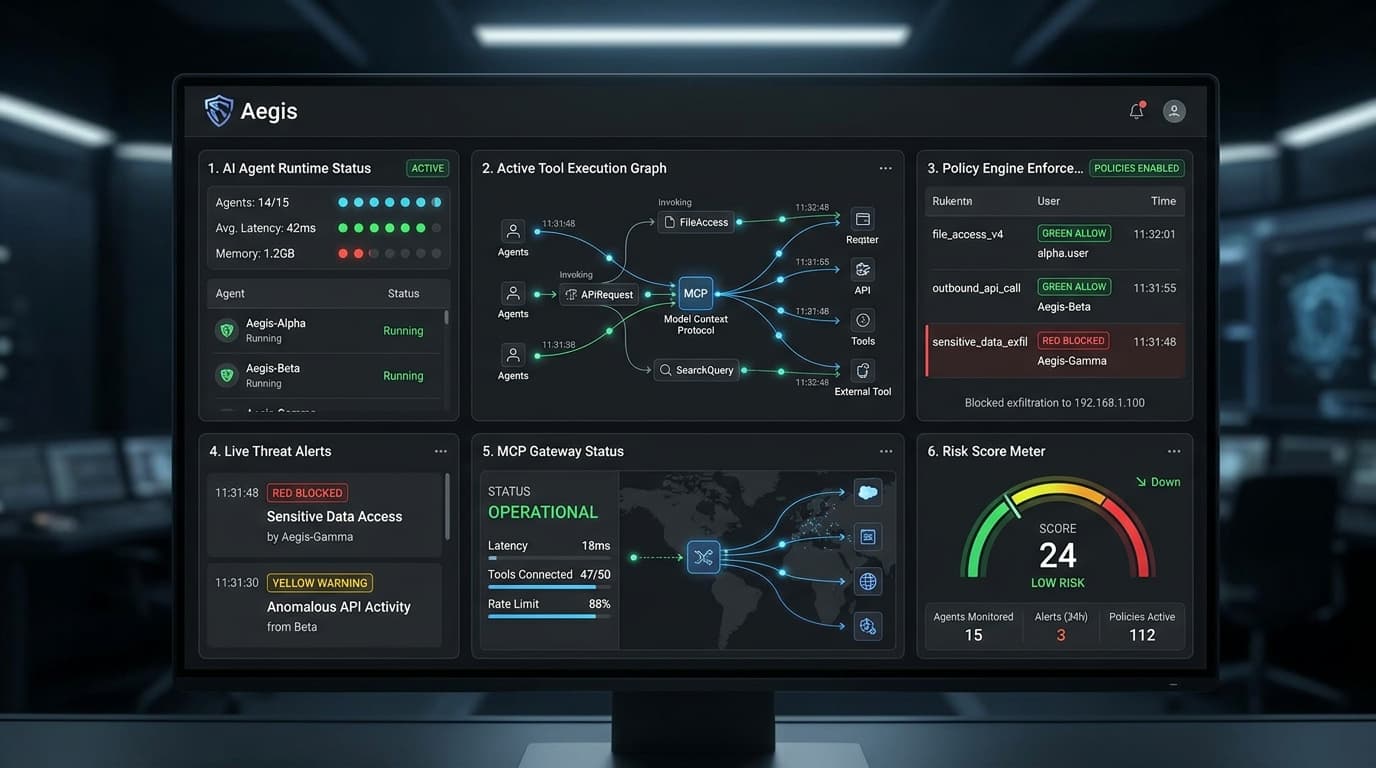
Why this system needed to exist
LLMs cannot be trusted as their own security boundary. If an AI agent has access to write files or execute network requests, an indirect prompt injection attack can trick the model into exfiltrating sensitive data or executing destructive actions. Without an out-of-band deterministic proxy, developers must either trust the model or heavily restrict agent autonomy.
How the solution was designed
Aegis enforces a zero-trust model using an out-of-band deterministic Policy Engine. By wrapping the Model Context Protocol (MCP) and agent SDK calls, every tool invocation is intercepted and assessed through permission models, threat intelligence, and human-in-the-loop approvals before reaching the target environment.
Implemented Features & Capabilities
Component Architecture
Deterministic policy evaluation engine, risk assessment, human approval queues, and tamper-resistant audit logs.
Zero-trust transparent proxy between MCP clients and servers, evaluating tool calls against active policies.
Interactive security console visualizing active agents, tool call graphs, blocked threats, and real-time approvals.
IDE extension for developers to review agent actions, and a benchmark suite to validate guardrails.